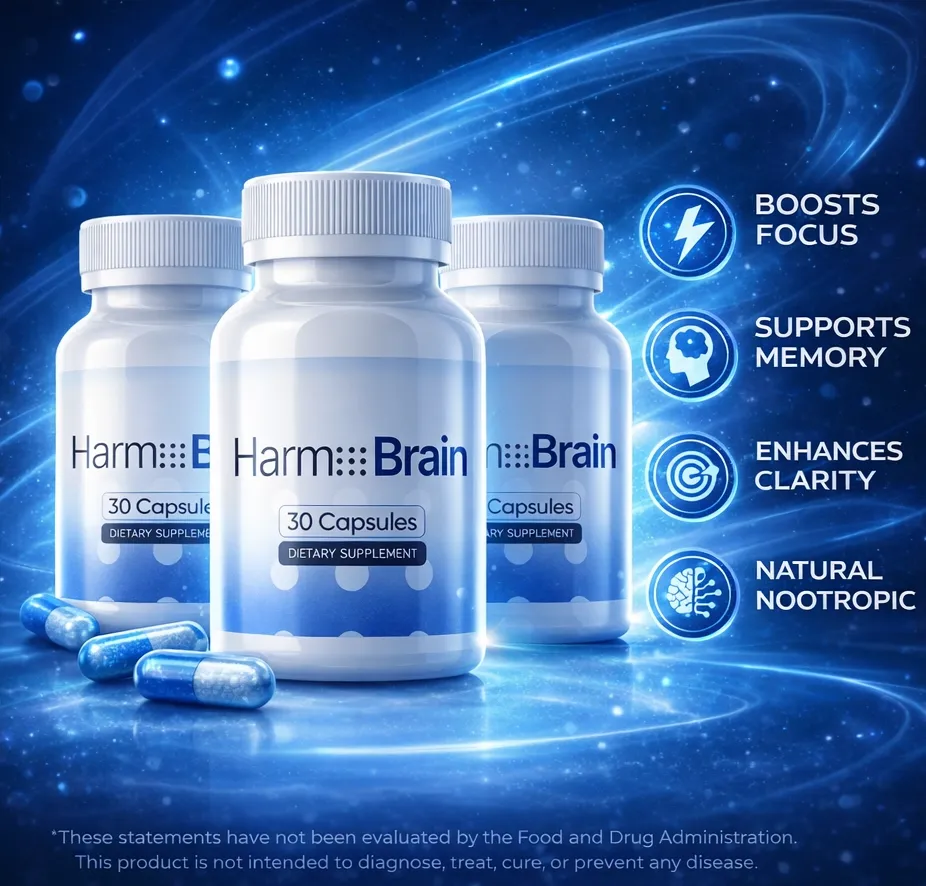
People searching “Harmo Brain ingredients” want to know exactly what’s in the capsule and whether those ingredients are backed by research. This piece breaks down each ingredient named across Harmo Brain’s marketing, what it’s for, and what the evidence actually shows — while being upfront that the formula itself isn’t consistent across sources.
If you’re searching for a straight answer on what’s in Harmo Brain, here’s the honest one: it depends which site you’re looking at. Several marketing sites use the Harmo Brain name for what appear to be different formulas. That’s unusual, and it means the fair way to answer “what’s in it” is to go through every ingredient that’s been named across the marketing, and explain what each one actually does — so you can judge for yourself whether any given version is worth trying.
The Three Ingredient Lists Attached to Harmo Brain
List one (the version most often paired with memory and focus claims): Bacopa Monnieri, Ginkgo Biloba, Lion’s Mane Mushroom, L-Theanine, Phosphatidylserine, B vitamins.
List two (paired with “cellular energy” and antioxidant claims): Magnesium Glycinate, Alpha Lipoic Acid, L-Carnitine, Turmeric Extract, CoQ10, Butcher’s Broom.
List three (occasionally mentioned alongside the above): Citicoline.
A retail listing under a near-identical name also lists Tongkat Ali and Wild Yam extract — ingredients associated with hormonal support, not cognition, and not present in either main list above.
Below is what the research actually says about the ones that show up most consistently.
visit harmo brain official website
Bacopa Monnieri
An Ayurvedic herb, one of the most studied in the nootropic space. A 2016 meta-analysis in the Journal of Ethnopharmacology found consistent memory-recall improvements in adults taking 300–600mg daily over 12 weeks or longer. The catch: benefits took weeks to appear and were tied to specific, disclosed doses — not to “Bacopa” as an ingredient-list entry with no stated amount.
Ginkgo Biloba
Long used for circulation and cognitive support. Evidence is mixed — some trials show modest benefits for age-related cognitive decline, others show no meaningful difference from placebo. It’s one of the more inconsistent performers in nootropic research, not a settled positive.
Lion’s Mane Mushroom
Popular in recent years for nerve growth factor support. Human trials are still limited; most positive findings come from small studies or animal research. Promising, but not yet backed by the volume of evidence Bacopa has.
L-Theanine
An amino acid found naturally in tea, well-documented for promoting calm alertness, especially in combination with caffeine. Since Harmo Brain markets itself as stimulant-free, L-Theanine here would mainly contribute to reduced jitteriness rather than a caffeine-style effect.
Phosphatidylserine
A phospholipid involved in cell membrane structure in the brain. Some research links it to modest improvements in memory in older adults, generally at doses around 100mg, taken multiple times daily — again, a detail that matters and that unbranded ingredient lists don’t disclose.
Citicoline
Studied for supporting neurotransmitter levels and general cognitive function, with a reasonably solid evidence base compared to some nootropic ingredients, particularly in older adults and after cognitive stress.
Magnesium Glycinate, Alpha Lipoic Acid, CoQ10
These appear in the second ingredient list and are legitimate nutrients with general roles in cellular energy and antioxidant defense. They’re common across many “cognitive energy” formulas, but their evidence for cognition specifically (as opposed to general health) is weaker than Bacopa’s or Citicoline’s.
Why the Dose Matters More Than the List
Every ingredient above has research behind it at a specific amount. None of Harmo Brain’s marketing sites disclose a full supplement facts panel with exact milligrams for each ingredient. That’s the actual gap between “this ingredient is backed by research” and “this product is backed by research” — they’re not the same claim, and a lot of nootropic marketing blurs the two on purpose.
visit harmo brain official website
What to Ask Before Buying Any Version of This Product
- Which exact formula am I ordering? Confirm it against the product label you’ll actually receive, not the marketing page.
- What’s the per-ingredient dose? A “proprietary blend” total doesn’t tell you if any single ingredient meets the amount used in the studies behind it.
- Is there third-party testing? This confirms identity and purity — it doesn’t confirm effectiveness, but it rules out mislabeling.
- Who makes it? A traceable manufacturer with a real address is a basic accountability check, especially given how many differently-branded versions of “Harmo Brain” exist.
Bottom Line
Individually, several ingredients tied to the Harmo Brain name have genuine research behind them — Bacopa Monnieri and Citicoline in particular. But “Harmo Brain” isn’t one consistent product with one consistent formula, so knowing that Bacopa works at 300–600mg tells you very little about what you’d actually get in a bottle labeled with that name. Get the exact label and dosage before deciding anything else.
FAQ
What is the main active ingredient in Harmo Brain? Depends on the source — some marketing centers the formula on Bacopa Monnieri and Ginkgo Biloba, others on Magnesium Glycinate and CoQ10. There’s no single confirmed “main” ingredient across all versions.
Is Bacopa Monnieri actually effective for memory? Research, including a 2016 meta-analysis, links consistent use at 300–600mg daily to memory recall improvements after 12+ weeks. Effects build gradually rather than appearing immediately.
Does Harmo Brain contain caffeine or stimulants? No version of the marketing lists a stimulant; L-Theanine, when present, is generally used for calm focus rather than energy.
How long does it take for nootropic ingredients like these to work? Most of the ingredients with real research behind them (Bacopa, Citicoline) show effects over weeks of consistent use, not immediately.
Should I check the label before buying? Yes — given that Harmo Brain’s ingredient list varies by source, confirm the exact supplement facts panel on the product you’re about to order before assuming it matches any research you’ve read about.
Next Step
Before ordering, pull up the actual product label (not the marketing copy) and check it against the ingredients and doses discussed here.
On-Page SEO Enhancements
Suggested H1: Harmo Brain Ingredients Explained: What’s Actually Inside
Suggested H2s:
- The Three Ingredient Lists Attached to Harmo Brain
- Bacopa Monnieri
- Ginkgo Biloba
- Lion’s Mane Mushroom
- L-Theanine
- Phosphatidylserine
- Citicoline
- Magnesium Glycinate, Alpha Lipoic Acid, CoQ10
- Why the Dose Matters More Than the List
- What to Ask Before Buying Any Version of This Product
- Bottom Line
Suggested internal link anchor text ideas:
- “how to read a supplement facts panel”
- “nootropic ingredients with the strongest research”
- “Harmo Brain reviews: is it legit”
Suggested schema type(s): Article, FAQPage
Suggested featured snippet answer (40–60 words): Harmo Brain’s ingredient list varies by source, with different marketing sites naming different formulas — commonly Bacopa Monnieri, Ginkgo Biloba, and Lion’s Mane in one version, and Magnesium Glycinate, CoQ10, and Alpha Lipoic Acid in another. Several of these ingredients have real research behind them individually, but no version discloses exact per-ingredient doses.