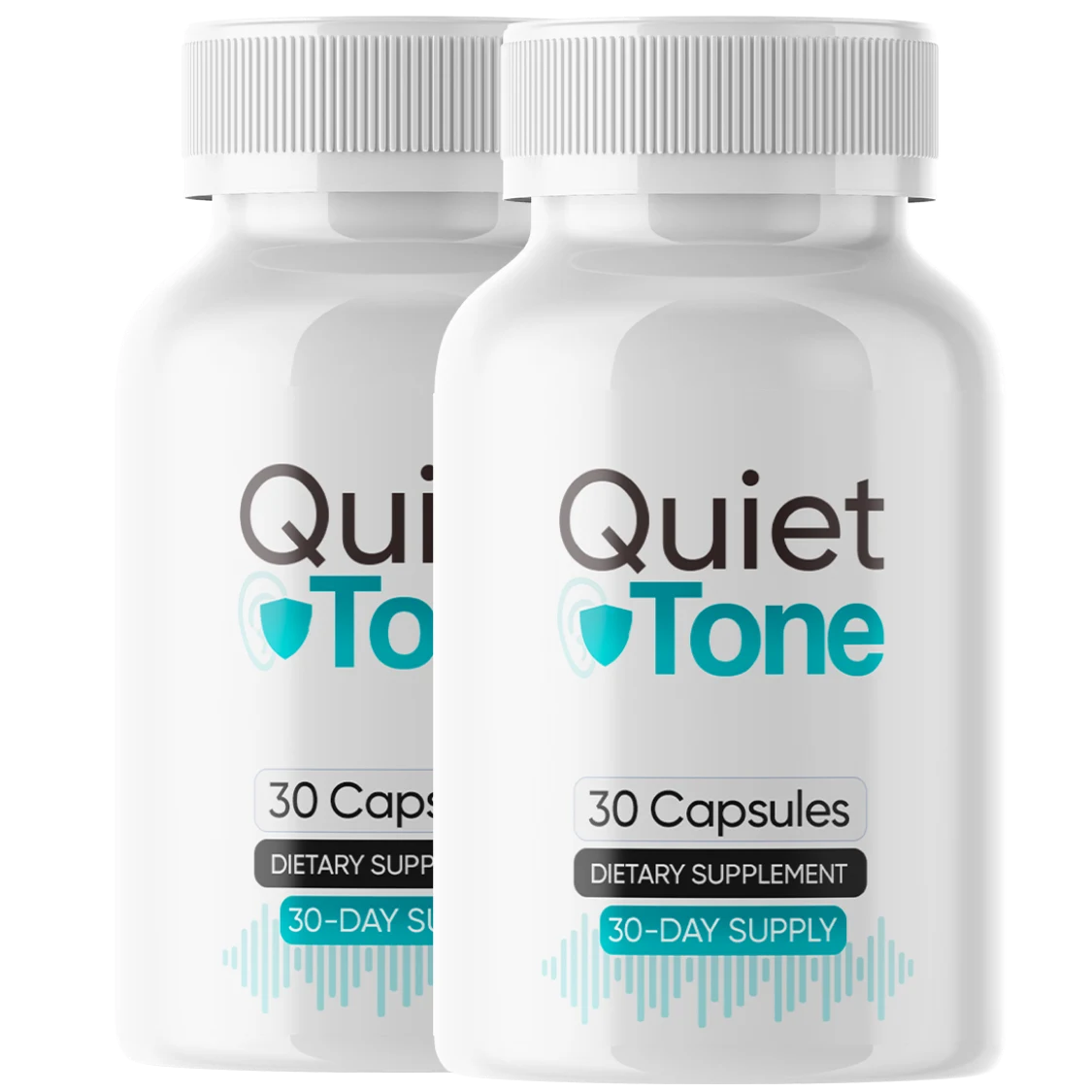
What Is Quiet Tone?
Quiet Tone is a dietary supplement marketed for individuals experiencing tinnitus—the perception of ringing, buzzing, or hissing in the ears without an external source. The product is positioned as a natural formula that combines calming botanicals with nutrients intended to support neural signaling and stress modulation.
According to available product information, Quiet Tone contains a comprehensive formula including Ashwagandha, Valerian root, GABA, 5-HTP, zinc, a full B-vitamin complex, L-Theanine, and other supportive nutrients . The manufacturer states these ingredients may support neural signaling, antioxidant defenses, and stress modulation, which could help reduce the perception of tinnitus.
The product is also described as incorporating “clinically-informed soundscapes”—frequencies designed to promote auditory relaxation . This suggests the product may include an audio component alongside the supplement itself, though details on how this is delivered are not specified.
Important clarification: Quiet Tone is not the same as “Quietum Plus,” a separate tinnitus supplement that has been evaluated by Tinnitus UK and found to lack evidence of effectiveness . They are entirely different products with different formulations.
What’s Known About the Ingredients
Quiet Tone’s formula is built around ingredients primarily associated with relaxation and stress reduction rather than direct auditory or neurological repair.
Ashwagandha is an adaptogenic herb studied for its potential to modulate cortisol and support the body’s stress response. While stress is known to exacerbate tinnitus perception, there is no evidence that ashwagandha directly reduces tinnitus volume or frequency.
Valerian Root is a traditional herbal sleep aid and relaxant. It may support calmness, but its role in tinnitus management is indirect at best—reducing anxiety around the sound rather than eliminating the sound itself.
GABA is an inhibitory neurotransmitter. Supplemental GABA has limited evidence of crossing the blood-brain barrier effectively, though some users report subjective calming effects.
5-HTP is a precursor to serotonin, often used for mood support. Serotonin pathways are involved in mood and anxiety, which can influence how distressing tinnitus feels.
L-Theanine is an amino acid found in green tea, well-established for promoting calm focus without sedation. It is one of the better-supported ingredients in the formula for subjective relaxation.
Zinc and B-Vitamins are essential nutrients for nerve function. Zinc deficiency has been associated with tinnitus in some studies, though causality and the benefit of supplementation in non-deficient individuals remain unclear.
Critical limitation: The manufacturer does not disclose individual ingredient dosages. Without knowing the amount of each component, it is impossible to verify whether the formula contains clinically meaningful doses of any ingredient. No product-specific clinical trials on the finished Quiet Tone formulation were identified in available sources.
How Quiet Tone Is Positioned to Work
Quiet Tone’s mechanism is framed around stress modulation and neural support rather than direct elimination of tinnitus. The logic is that tinnitus distress is amplified by anxiety and stress, and that calming the nervous system may reduce the perceived burden of the condition.
One review from a naturopathic perspective notes: “These compounds are known to promote relaxation, which can indirectly lessen the stress-related amplification of tinnitus” . The same source acknowledges that “individual results vary, and some users report noticeable calm within two weeks, while others see only subtle changes” .
The soundscape component, if included, suggests a multi-modal approach combining nutritional support with auditory relaxation—a strategy that aligns with established tinnitus management principles like sound therapy, though the specific delivery and efficacy of Quiet Tone’s implementation are not detailed.
The evidence gap: The distinction between “supporting relaxation” and “treating tinnitus” is critical. No peer-reviewed study has demonstrated that Quiet Tone reduces tinnitus loudness, frequency, or intrusiveness. The ingredients may support general calm, but the marketing implication that this translates to meaningful tinnitus relief is not supported by product-specific evidence.

What Users Are Reporting
Independent, verifiable user feedback for Quiet Tone specifically is extremely limited. The primary source available is a single review from a naturopathic website, which notes varied experiences: “some users report noticeable calm within two weeks, while others see only subtle changes” .
Reported considerations:
- The product may support a sense of calm and relaxation, which some users find helpful for managing their emotional response to tinnitus.
- Results appear to be gradual and subjective rather than dramatic or immediate.
- No independent review aggregation (such as Trustpilot or Reddit) with meaningful sample sizes for Quiet Tone was identified in available sources.
Critical limitation: The absence of substantial independent user feedback means consumers cannot assess typical outcomes. The reviews that may exist on promotional or affiliate pages should be treated with appropriate skepticism.
Pricing and Availability
Pricing information for Quiet Tone is limited and appears primarily in review contexts rather than official sales pages. One source references the “added expense” of the product without specifying exact figures .
For context, competing tinnitus supplements in this category typically range from $49 to $79 per bottle for a one-month supply. Quiet Tone’s pricing should be verified directly on the official website before purchasing, as promotional offers and availability may change.
Critical caveat: Because Quiet Tone appears to be sold through affiliate-driven channels, pricing and package details may vary across different landing pages. Consumers should verify the current offer at checkout.
Money-Back Guarantee
Specific refund terms for Quiet Tone were not identified in available sources. The product may offer a standard money-back guarantee, but the duration and conditions should be verified on the official website or checkout page before purchasing.
For comparison, competing tinnitus supplements often offer 60-day guarantees. If Quiet Tone does not clearly state its refund policy, this should be a consideration in the purchase decision.
Key Limitations and Considerations
No product-specific clinical evidence. No published, independent clinical trial on the finished Quiet Tone formulation was identified. The evidence supporting individual ingredients relates to relaxation and stress, not tinnitus treatment.
The mechanism targets stress, not the sound. Quiet Tone may support calmness, but there is no evidence it reduces tinnitus loudness or frequency. The distinction between “feeling calmer about tinnitus” and “having less tinnitus” is essential.
Undisclosed dosages. The manufacturer does not publish individual ingredient amounts, making it impossible to verify potency.
Limited independent user feedback. No substantial review aggregation exists for Quiet Tone, making it difficult to assess typical outcomes.
Website legitimacy unclear. Available sources do not provide verifiable trust scores for Quiet Tone’s sales domains. Consumers should exercise standard caution with any supplement purchased through affiliate-driven funnels.
Not a substitute for medical care. Tinnitus can be a symptom of underlying conditions including hearing loss, earwax impaction, medication side effects, or (rarely) acoustic neuroma. Individuals with new, unilateral, pulsatile, or distressing tinnitus should seek evaluation by an audiologist or ENT specialist rather than relying on a supplement.
Frequently Asked Questions
Is Quiet Tone safe?
The listed ingredients—Ashwagandha, Valerian root, GABA, 5-HTP, L-Theanine, zinc, and B-vitamins—are generally regarded as safe for healthy adults at appropriate doses. However, the undisclosed dosages and lack of product-specific safety data mean individual assessment is limited. Consult a healthcare professional before use, especially if pregnant, nursing, taking medications (particularly SSRIs, since 5-HTP may interact), or managing a medical condition.
Who should avoid Quiet Tone?
Pregnant or breastfeeding individuals, those under 18, individuals taking antidepressants or other serotonergic drugs (due to 5-HTP content), and anyone with liver concerns (due to Valerian root) should consult a physician first.
Does Quiet Tone actually work for tinnitus?
There is no evidence that Quiet Tone reduces tinnitus loudness or frequency. The ingredients may support relaxation and reduce stress-related amplification of tinnitus distress, which some users may find helpful. However, this is fundamentally different from treating the underlying condition.
How long until results are noticeable?
Available information suggests some users report calm within two weeks, while others see only subtle changes . The manufacturer’s suggested evaluation period is not specified in available sources.
Is there a subscription or auto-ship program?
Available information does not indicate whether Quiet Tone operates a subscription program. Verify this at checkout before completing any purchase.
Where should I buy Quiet Tone?
Verify you are on a legitimate official domain before purchasing. Avoid affiliate landing pages and third-party resellers. Use payment methods with buyer protection, such as credit cards or PayPal.
The Bottom Line
Quiet Tone is positioned as a natural supplement for tinnitus support, combining relaxation-focused botanicals and nutrients with what appears to be an auditory relaxation component. Its ingredients have plausible roles in supporting calm and modulating stress—factors that can influence how distressing tinnitus feels.
However, the product carries significant limitations. No product-specific clinical evidence demonstrates that Quiet Tone reduces tinnitus loudness, frequency, or intrusiveness. The ingredients target stress and relaxation, not the auditory system itself. Dosages are undisclosed. Independent user feedback is minimal. And the distinction between “feeling calmer about the sound” and “having less of the sound” is critical—marketing that blurs this line should be viewed with caution.
For individuals whose tinnitus is mild and primarily distressing due to anxiety, a relaxation-focused supplement may offer some subjective benefit as part of a broader stress-management approach. However, anyone with persistent, bothersome, or unilateral tinnitus should prioritize evaluation by an audiologist or ENT specialist. Evidence-based interventions—including cognitive behavioral therapy for tinnitus (CBT-T), sound therapy, and treatment of underlying conditions—have far stronger support than any supplement.
Before purchasing, verify the official source, confirm the refund policy at checkout, and consult a healthcare provider—particularly if you take medications that may interact with 5-HTP or Valerian root.
Important Disclaimer: This information is for informational purposes only and is not intended to diagnose, treat, cure, or prevent any disease. Statements regarding dietary supplements have not been evaluated by the U.S. Food and Drug Administration. Consult a qualified healthcare professional before using any dietary supplement or making significant changes to your diet, exercise, or wellness routine. Tinnitus is a medical symptom that warrants professional evaluation. Individual experiences may vary.
Read also
DentaBiome Review 2026: Ingredients, Dosage Transparency & Website Trust Concerns