SodaBurn: A Balanced Review
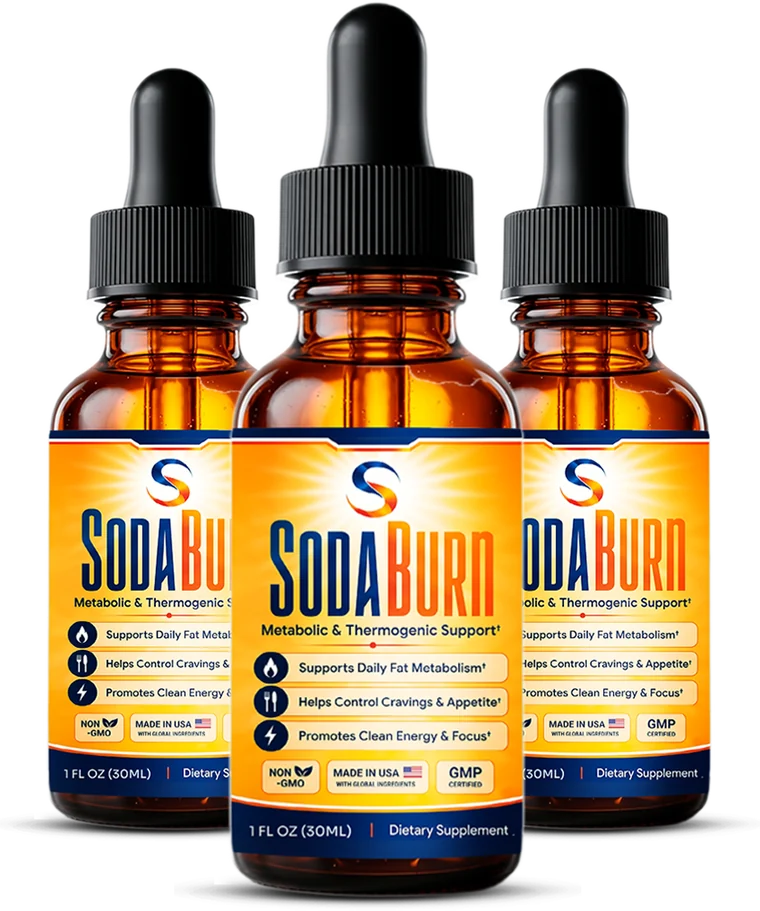
SodaBurn is a liquid dropper supplement marketed for metabolism support, appetite control, steady energy, and weight management. It is sold through multiple online storefronts and third-party marketplaces, with a formula that varies depending on which page you land on. This review examines what the label actually discloses, the evidence behind the named ingredients, what independent trust assessments show, and the practical points buyers may want to verify before ordering.
A note on naming and format: SodaBurn is a liquid, supplied in a 1 fl oz (30 ml) bottle, taken as a once-daily dropperful. The brand appears across numerous domains and marketplace listings with different ingredient profiles, which is the single most important fact for anyone considering a purchase.
What SodaBurn Claims to Offer
SodaBurn is positioned as a once-daily liquid designed to support metabolism, appetite balance, thermogenesis, and everyday energy. The marketing frames it as a convenient alternative to capsules and presents it as sitting alongside—rather than replacing—balanced eating and physical activity.
The product is sold in multi-bottle packages and is described by some storefronts as a one-time purchase without automatic renewals or hidden fees. A 60-day money-back guarantee is advertised, though the conditions attached to it are more restrictive than the headline suggests.
The core issue is what the label actually contains, because the public Supplement Facts panels do not tell a consistent or reassuring story.
Ingredient Disclosure: One Disclosed Number, One Very Small Blend
The most widely circulated SodaBurn Supplement Facts panel discloses exactly two things: Chromium Picolinate at 7 mcg, and a proprietary blend totaling 15.47 mg. Everything else—the botanicals and amino acids the marketing discusses—sits inside that single blend with no individual amounts.
The blend lists several recognizable ingredients, including Maca Root Extract, African Mango Seed Extract, Green Tea Leaf Extract, Guarana Seed Extract, Grape Seed Extract, L-Carnitine, and L-Glutamine. Naming them is better than hiding them entirely, but the dosing is the problem.
An independent analysis put the issue plainly: botanical extracts such as green tea or African mango are typically studied at 150 mg to 500 mg per day to observe measurable metabolic effects. Because the entire SodaBurn blend is only 15.47 mg, the individual amount of each ingredient may be minimal—and the physiological impact at those thresholds may not align with the outcomes the marketing describes. The 7 mcg of chromium is also a trace amount; chromium’s independent impact on significant weight reduction is described as limited even at higher doses.
A further transparency problem is that different storefronts describe different formulas. One landing page promotes a “clinically relevant probiotic blend” containing Lactobacillus acidophilus, but the physical labels on other official storefronts show no probiotics or live bacteria cultures at all. Marketplace listings add another layer: one label lists a 121 mg blend of circulation herbs (Gotu Kola, Horse Chestnut, Motherwort, Butcher’s Broom) with none of the weight-loss botanicals, and another lists a 195 mg blend with different concentrations and a different distributor. Buyers cannot be certain which formula they will receive without checking the actual bottle label.
One marketing note worth flagging: promotional graphics feature an “FDA-Registered Facility” badge. Facility registration is a standard regulatory requirement for manufacturing locations and does not constitute FDA approval or endorsement of the supplement itself.
Ingredient Evidence: Recognizable Names, No Finished-Product Trial
The named ingredients are not inherently fraudulent—they are recognizable botanicals and nutrients with varying levels of research behind them. The limitation is that the doses are unknown and vanishingly small, and no clinical trial of the SodaBurn formula itself was identified.
Green Tea Extract contains catechins that have been studied alongside caffeine for modest effects on energy expenditure and fat oxidation. A meta-analysis cited in the marketing found statistically significant reductions in BMI and waist circumference—but that research used studied doses of green tea catechins, not a fraction of a 15.47 mg blend.
African Mango Seed Extract has been studied for leptin sensitivity and weight management, but again at doses far above what a 15.47 mg total blend could plausibly deliver.
Guarana Seed Extract is a natural caffeine source. Caffeine can produce a small, temporary increase in energy expenditure, but it also carries risks of jitteriness, increased heart rate, and sleep disruption—especially when combined with other caffeine sources. The total caffeine content per serving is not clearly disclosed.
Maca Root, Grape Seed Extract, L-Carnitine, and L-Glutamine have varying research contexts—energy, antioxidants, fatty-acid transport, and amino acid support respectively—but none has been tested as part of this formula at this dose.
The bottom line: ingredient-level research does not establish that a 15.47 mg blend produces the outcomes described in the marketing, and no trial of the finished product was located.
visit sodaburn official website
Trust Assessments and Website Transparency
Independent trust assessments across SodaBurn promotional domains produce wildly inconsistent scores—the widest spread encountered in this product category:
- One primary commercial domain received a ScamAdviser trust score of 0, with the assessment concluding there is a “strong likelihood the website is a scam” and noting that the owner uses a service to hide their identity on WHOIS, the registrar has a high percentage of spammers and fraud sites, and the site is very young.
- The same domain also received a Gridinsoft score of 12/100, classified as a “Suspicious Shop” with a blacklist detection, a 3-month-old domain, and no established public review history. Gridinsoft warned that shops in this class often result in no shipment, wrong item, or low-quality substitute after checkout.
- Another variant received a Gridinsoft score of 27/100, flagged as a new domain.
- One promotional subdomain received a Gridinsoft score of 25/100, described as untrusted unless strong independent proof exists to the contrary.
- Another domain received a ScamAdviser score of 46, with the assessment concluding it was “unsure if the website is legit”.
- The primary domain received a Scam Detector score of 26.8/100, tagged “Debatable. Contentious. Controversial” with detected high-risk activity related to phishing and spamming.
- One domain variant, however, received a ScamAdviser score of 85, described as “legit and safe for consumers to access”—though still flagged for low traffic and a server hosting other low-rated sites.
The pattern is one of multiple domains with scores ranging from 0 to 85. The high score on one domain does not erase the 0 and 12 on the primary commercial domain. Buyers should confirm which domain they are ordering from and treat the low-scored domains with particular caution.
Pricing and Refund Policy
Pricing is relatively consistent across the storefronts that publish it:
- 1 bottle: $69
- **3 bottles: $177** ($59 per bottle)
- **6 bottles: $294** ($49 per bottle)
Each bottle is a 1 fl oz (30 ml) supply taken as a daily dropperful.
The refund policy is a 60-day money-back guarantee, but the conditions are more restrictive than the headline. According to the captured policy, the trial period is at least 30 days, returns must be initiated within 60 days, the buyer is responsible for return shipping, and a 20% restocking fee is deducted from the refund. That means a refund on a $69 single bottle would return roughly **$55** before shipping costs, and the buyer must have used the product for at least a month before qualifying.
Because the terms vary by storefront and can change, confirm the written refund conditions on the specific checkout page used before paying.
Customer Feedback: No Independent Review Footprint
Public feedback on SodaBurn is effectively absent from independent platforms. A Trustpilot profile shows 0 reviews in the last 12 months. The marketing displays a claim of 4.9/5 from 12,400+ reviews, but those reviews are not linked to an independent platform where they can be verified.
This is a meaningful consideration. A heavily promoted supplement with a claimed review base in the thousands that has no verifiable footprint on Trustpilot or comparable platforms suggests the testimonials are self-published and unverifiable. The scarcity of independent user experience means buyers are effectively making a decision based on marketing materials and trust scores rather than a track record of real-world outcomes.
Frequently Asked Questions
Is SodaBurn a legitimate product?
SodaBurn is a real liquid supplement that is sold and delivered, and some storefronts describe purchases as one-time transactions without automatic renewals. The main considerations are formula inconsistency, extremely low dosing, and trust scores ranging from 0 to 85 across domains. It is not a scam in the sense of taking money and delivering nothing, but the transparency and dose-disclosure failures are substantial.
What are the ingredients?
The most commonly published label discloses Chromium Picolinate at 7 mcg and a 15.47 mg proprietary blend containing Maca Root Extract, African Mango Seed Extract, Green Tea Leaf Extract, Guarana Seed Extract, Grape Seed Extract, L-Carnitine, and L-Glutamine. Other storefronts describe different formulas, including probiotic versions and marketplace listings with entirely different herb blends. Check the bottle label on the specific product you receive.
Do the ingredients work for weight loss?
The named ingredients have ingredient-level research at doses of 150–500 mg for botanicals like green tea and African mango. The entire SodaBurn blend is 15.47 mg, meaning individual doses may be minimal and are unlikely to match the studied amounts. No clinical trial of the finished SodaBurn formula was identified.
Is it safe?
The ingredients are generally recognized as safe at typical amounts, but doses are undisclosed and the formula varies across sellers. The product contains natural caffeine sources (green tea, guarana), so caffeine-sensitive individuals should account for their total intake. Anyone who is pregnant, nursing, managing a health condition, or on prescription medication should consult a doctor before use. The formula has not been third-party tested according to available sources.
How much does it cost?
$69 for one bottle**, **$177 for three ($59/bottle), and **$294 for six** ($49/bottle).
What is the refund policy?
A 60-day money-back guarantee applies, with a minimum 30-day trial period, buyer-paid return shipping, and a 20% restocking fee deducted from the refund. Confirm the written terms on the specific order page.
Who makes SodaBurn?
A Kentucky corporate registration for “SodaBurn Inc” exists, formed in March 2023. However, the WHOIS ownership of the primary commercial domain is hidden, the registrar has a high fraud association rate, and no verifiable manufacturing facility or founder was identified in the available sources.
Is it available in stores?
SodaBurn is sold through multiple online storefronts and third-party marketplaces, not mainstream retail. Formula consistency across these channels is poor, so verifying the seller and the label is essential.
Points to Consider
- The entire active blend is 15.47 mg. Studied doses for the named botanicals are 150–500 mg; individual amounts here may be minimal.
- Formulas conflict across sellers. One page describes probiotics; labels elsewhere show no probiotics. Marketplace listings show entirely different herb blends.
- Trust scores range from 0 to 85. The primary commercial domain scores 0 (ScamAdviser) and 12/100 (Gridinsoft); one variant scores 85.
- No independent review footprint. Trustpilot shows zero reviews despite a claimed 12,400+ ratings.
- Refund is conditional. 60-day window, 30-day minimum trial, buyer-paid shipping, and a 20% restocking fee.
- “FDA-Registered Facility” is not FDA approval. It is a standard manufacturing registration, not an endorsement of the product.
Who SodaBurn May Suit
SodaBurn may appeal to buyers who prefer a liquid dropper format, who want a low-commitment entry price ($69 for one bottle), and who are willing to verify the seller, label, and refund terms before ordering. The one-time purchase model, where confirmed, avoids subscription risk.
It is less suited to buyers who want disclosed doses that match clinical research, a consistent formula across sales channels, a finished-product trial, independently verifiable reviews, or a refund without restocking fees and return-shipping costs. For those priorities, products from established brands sold through mainstream retailers—with full label disclosure and published certificates of analysis—are a more transparent starting point.
Anyone with genuine weight-management concerns should consider a medical evaluation first; dietary supplements cannot legally diagnose, treat, cure, or prevent any disease, and sustainable weight management depends primarily on diet, activity, sleep, and medical guidance.
Final Assessment
SodaBurn is a commercially available liquid supplement with a formula disclosure problem that undermines its marketing. The product exists, ships, and some storefronts offer a one-time purchase with a written refund policy. But the entire active blend is 15.47 mg—a fraction of the studied doses for the ingredients it names—and different sellers describe entirely different formulas, including probiotic claims that do not appear on the physical labels.
The limitations are structural and product-level: dose transparency is effectively absent, formula consistency across channels is poor, trust scores on the primary domain are 0 and 12/100, no independent reviews exist on Trustpilot, and the refund carries a 20% restocking fee and buyer-paid shipping after a 30-day minimum trial. The 4.9/5 rating displayed in the marketing is not independently verifiable.
For buyers, a measured approach makes sense: purchase only if you can verify the seller and the exact label, confirm the refund terms at checkout, account for the caffeine content, and set expectations at “minimal effect at best” given the dose profile. SodaBurn is not a proven weight-management solution, and nothing in the available evidence suggests it should be treated as one